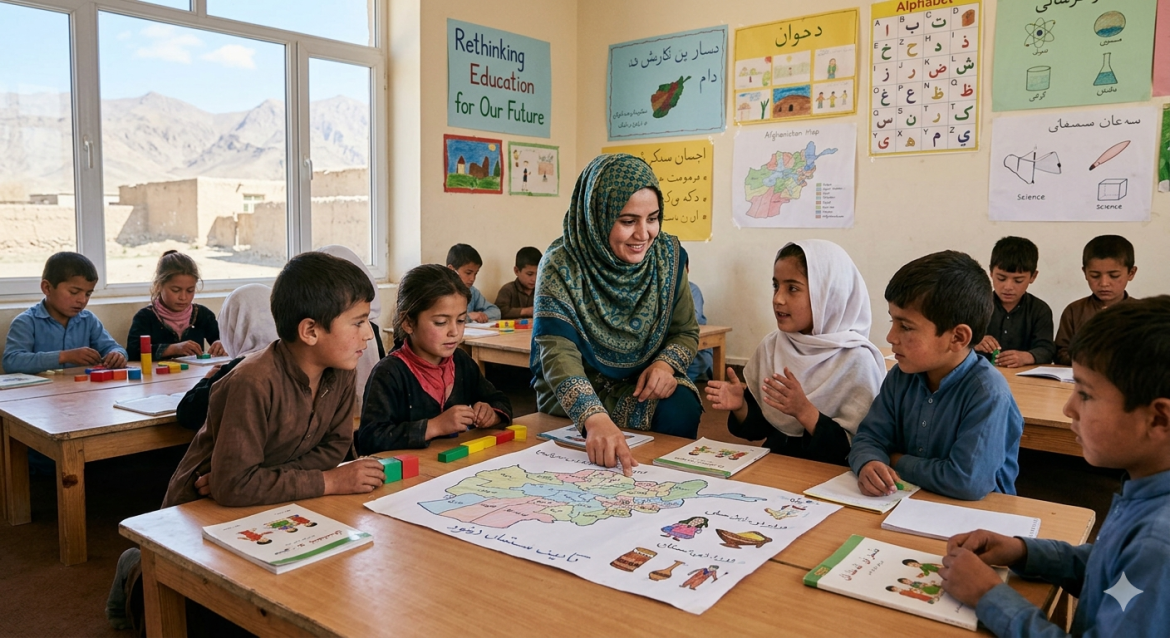
Education has always been one of the most important foundations for any society that hopes to move forward. In a country like Afghanistan, where many children still face difficulties in accessing quality schooling, it becomes even more important to think carefully about what kind of learning we are offering at the earliest stages of life.
Primary education is not only about teaching children how to read, write, and calculate. It is about shaping how they think, how they see the world, and how confident they feel in expressing themselves. If these early years are handled well, they can influence a child’s entire future.
Learning That Focuses on Understanding, Not Just Memorization
In many classrooms, children are still expected to memorize lessons without fully understanding them. While memorization has its place, real learning happens when students are able to connect ideas, ask questions, and relate what they learn to their everyday lives.
Young children naturally learn best through stories, examples, group activities, and play. When teaching methods are simple, interactive, and meaningful, children not only enjoy school more but also remember what they learn for a longer time.
The aim should be to help children think, not just repeat.
Teachers Who Are Trusted and Supported
No education system can succeed without strong and motivated teachers. Teachers are the ones who bring lessons to life in the classroom, and their role goes far beyond delivering textbooks.
To truly improve primary education, teachers need proper training before they enter classrooms, as well as continuous opportunities to improve their skills throughout their careers. Just as importantly, they need respect, trust, and fair working conditions.
When teachers are supported and given some freedom in how they teach, they are better able to respond to the needs of their students. This creates a more positive and effective learning environment.
Classrooms That Allow Children to Learn Properly
In many areas, classrooms are overcrowded and lack basic facilities. This makes it difficult for both teachers and students to focus on learning.
Even without major resources, improvements can still be made. Smaller class sizes, better organization of learning time, and a more structured classroom environment can already make a big difference.
A clean, safe, and welcoming classroom helps children feel comfortable. When children feel safe, they are more open to learning.
Making Education Fair and Accessible for All Children
Every child deserves the chance to go to school, regardless of where they live, their family background, or whether they are a boy or a girl. Unfortunately, this is still not the reality everywhere.
Efforts should be made to ensure that schools are available in rural areas, that families are supported so children can attend regularly, and that no child is excluded from education.
Girls’ education in particular needs consistent attention and protection. When girls are educated, the benefits extend to entire families and communities.
Reducing Pressure in Early School Years
Primary school should be a place where children feel encouraged, not stressed. When too much importance is placed on exams and rankings at an early age, children often lose interest or confidence in learning.
Instead, children should be guided based on their progress. Teachers can observe their understanding through activities, discussions, and simple assignments rather than relying only on formal tests.
When mistakes are seen as part of learning rather than failure, children become more confident and willing to try.
Allowing Space for Creativity and Play
Children learn a great deal through play, creativity, and interaction with others. These are not separate from education they are part of it.
Drawing, storytelling, group work, music, and outdoor activities help children develop important skills such as communication, cooperation, and emotional awareness.
A child who is encouraged to express themselves grows not only academically, but also socially and emotionally.
Strengthening the Role of Families and Communities
Education does not happen in schools alone. Families and communities play an important role in shaping a child’s learning experience.
When parents are involved and informed, children tend to do better in school. Simple communication between teachers and families can build trust and improve support for students at home.
Schools that stay connected to their communities often create a stronger sense of responsibility and shared purpose.
Using Available Resources in a Smarter Way
While resources may be limited, they can still be used effectively. Learning materials can be shared, group activities can be encouraged, and students can also learn from one another.
Sometimes, simple and practical solutions can be more effective than complex systems that are difficult to maintain. The focus should always remain on what helps children learn best in their specific context.
Looking Ahead
A strong primary education system is not built overnight. It grows through consistent effort, thoughtful planning, and a genuine focus on children’s needs.
For Afghanistan, improving early education is one of the most important investments that can be made for the future. Children who receive a strong foundation in their early years grow into adults who are more confident, capable, and prepared to contribute positively to their society.
In the end, education is not only about schools or textbooks. It is about giving every child a fair chance to understand the world and their place in it and to believe that they can shape it in a better way.